“I’m a hawker, my Mummy is a hawker so I’m a hawker too. I’m the third of eight children. Of my two older brothers, one hawks and the other one is a driver.”
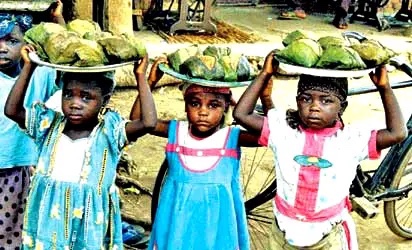
Child hawking is prevalent practice in Nigeria, most major highways and streets are often flooded with emaciated children running after cars on shrunken legs and balancing boxes of pastries and cigarettes twice their size on their bobbleheads.
The International Labour Organisation estimates that in Nigeria about 14 million children between the ages of 5 and 14 are involved in a form of economic activity. UNICEF estimates in their 2017 annual report around 10.5 million children are not in school, making Nigeria’s uneducated child population amount to one-fifth of the global burden for out-of-school children. But while a loss of education is the most cited side effect of hawking, the dangers aren’t just academic- they’re physical too.
“I ran after a car once and dropped the things I was carrying and the driver ran over everything, my Mommy beat me that day, we lost so much money, said Ifemelu, a 15-year-old hawker.”
Stories abound where child hawkers who chase moving cars and cluster near traffic girds are knocked down by other vehicles, leading to injuries, bone fracture and amputation, maiming and death. Child hawkers due to long hours of wandering about and lack of time to rest and eat experience physical exertion, malnutrition and premature ageing.
 Site Title